

World · Space
A Football Field Over Point Nemo: NASA’s $843 Million Plan to Bring the Space Station Down
It has circled the Earth for more than a quarter of a century and has not stood empty for a single day since November 2000. Now the International Space Station has a retirement date, a custom-built funeral vehicle, and a grave picked out in the emptiest ocean on the planet.
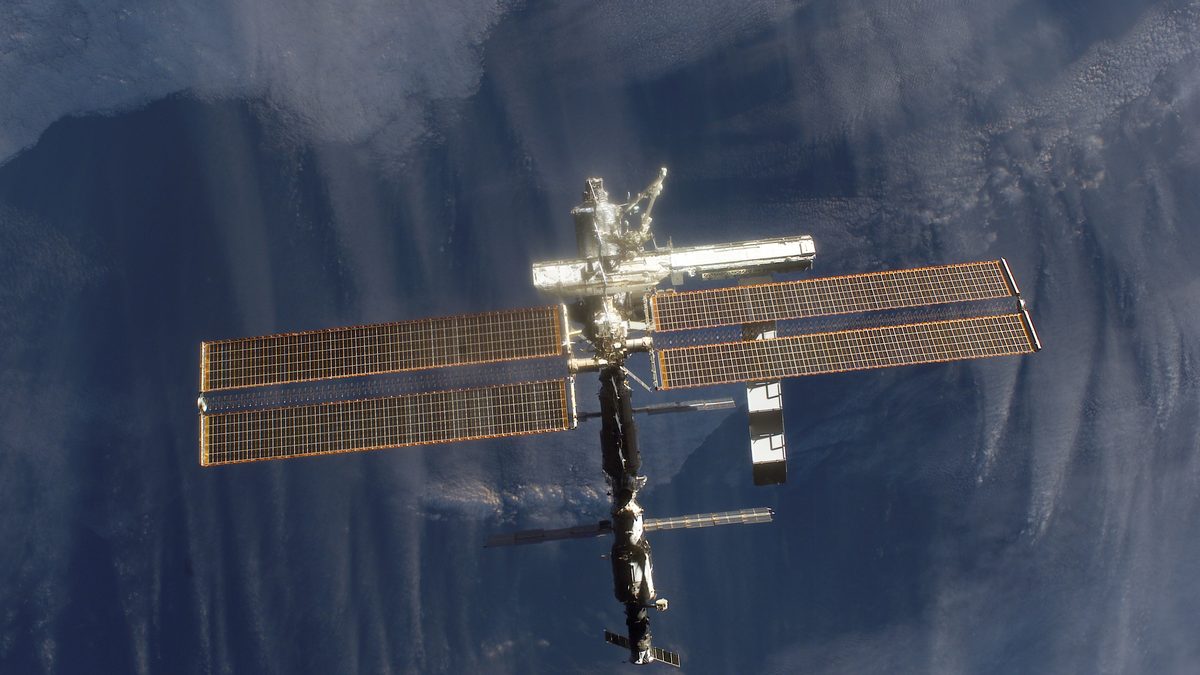
It weighs about as much as seventy elephants, stretches longer than a football field, and has not been empty for a single day in more than twenty-five years. The International Space Station is the largest thing humanity has ever flown — and it now has an appointment with the loneliest stretch of water on Earth. Under NASA’s transition plan, station operations run to the end of 2030, and in January 2031 the outpost will be deliberately flown into the atmosphere and dropped, in pieces, into the South Pacific.
The station’s numbers still startle. Its mass is about 419,725 kilograms — call it 420 tonnes — and its great truss runs 109 metres end to end. The first module, Russia’s Zarya, went up on 20 November 1998; the first resident crew arrived on 2 November 2000, and someone has been living aboard ever since, through the entire adult life of anyone under thirty. Five space agencies built it and run it together: NASA, Roscosmos, Europe’s ESA, Japan’s JAXA and Canada’s CSA.
Bringing it down safely turns out to be a mission in its own right. In June 2024, NASA awarded SpaceX a contract worth up to $843 million to build a one-of-a-kind spacecraft, the US Deorbit Vehicle — a heavily modified Dragon fitted with 46 Draco thrusters and roughly six times a normal Dragon’s propellant. The launch is bought separately, taking the whole programme to around $1.5 billion. NASA will own and operate the vehicle; SpaceX is, in effect, building the station’s funeral ship. The crew will leave first. Then the vehicle, docked to the station, will fire the final burn that commits 420 tonnes to the fire — and it will be destroyed along with its charge.
Why not simply bring the station home? Because it was never designed to come apart. The modules and truss went up across some 27 Space Shuttle flights over thirteen years, and taking large pieces back down would need a shuttle-class cargo bay — a vehicle that has not existed since the Shuttle retired in 2011. NASA’s own analysis is blunt: the big modules cannot be returned. The alternative of boosting the station into a high “graveyard” orbit fared no better. The tanker craft it would need do not exist, the cost would be extreme, and at around 800 kilometres the average time between damaging debris strikes collapses from roughly 51 years to under four. Worst of all, it would only postpone the ending: one day the dead station would still come down — uncontrolled, over who knows where.
“You cannot bring a football field home in a suitcase, and you cannot park it forever — so NASA will fly it, one last time, into the loneliest water on Earth.
So the end will be controlled, and it will be violent, and it will be mostly fire. Drawing on how Mir and Skylab broke apart, NASA expects the station to come apart in three stages during re-entry — the solar arrays first, then the modules, then the main structure — with most of its mass burning up in the atmosphere. What survives, the dense and stubborn pieces, is aimed at the South Pacific Oceanic Uninhabited Area around Point Nemo: the point on Earth farthest from any land, some 2,700 kilometres from the nearest shore. Around 300 spacecraft already rest in that spacecraft cemetery. The station will be in familiar company.
What happens next is a handover rather than an ending. NASA is shifting its astronauts to commercially owned stations in low Earth orbit — private outposts, Axiom Space’s among them — so that an American presence in orbit continues without a government-owned station. And whatever happens in 2031, the sky will not be empty: China’s Tiangong station, which this month hosted Pakistan’s first astronaut, Zeeshan Ali, is built to keep flying long after the ISS is gone.
There is something fitting in the arithmetic of it. The station that taught five rival space agencies to live together will make its final flight alone, at night over the emptiest ocean on the planet, guided by a vehicle built for exactly one journey. No crew will watch from inside. The longest unbroken human presence in space ends not with a failure, but with a plan — written years in advance, costed to the last thruster, and aimed at the one place on Earth where a falling football field can hurt no one.
Based on NASA’s ISS Transition Plan, NASA’s June 2024 deorbit-vehicle announcement and agency reporting.
For more stories like this, subscribe to STORIX with FAYS on YouTube and visit our Videos gallery.
Comments