

News
Pakistan's First Astronaut: Zeeshan Ali Reaches Orbit Aboard China's Shenzhou-24
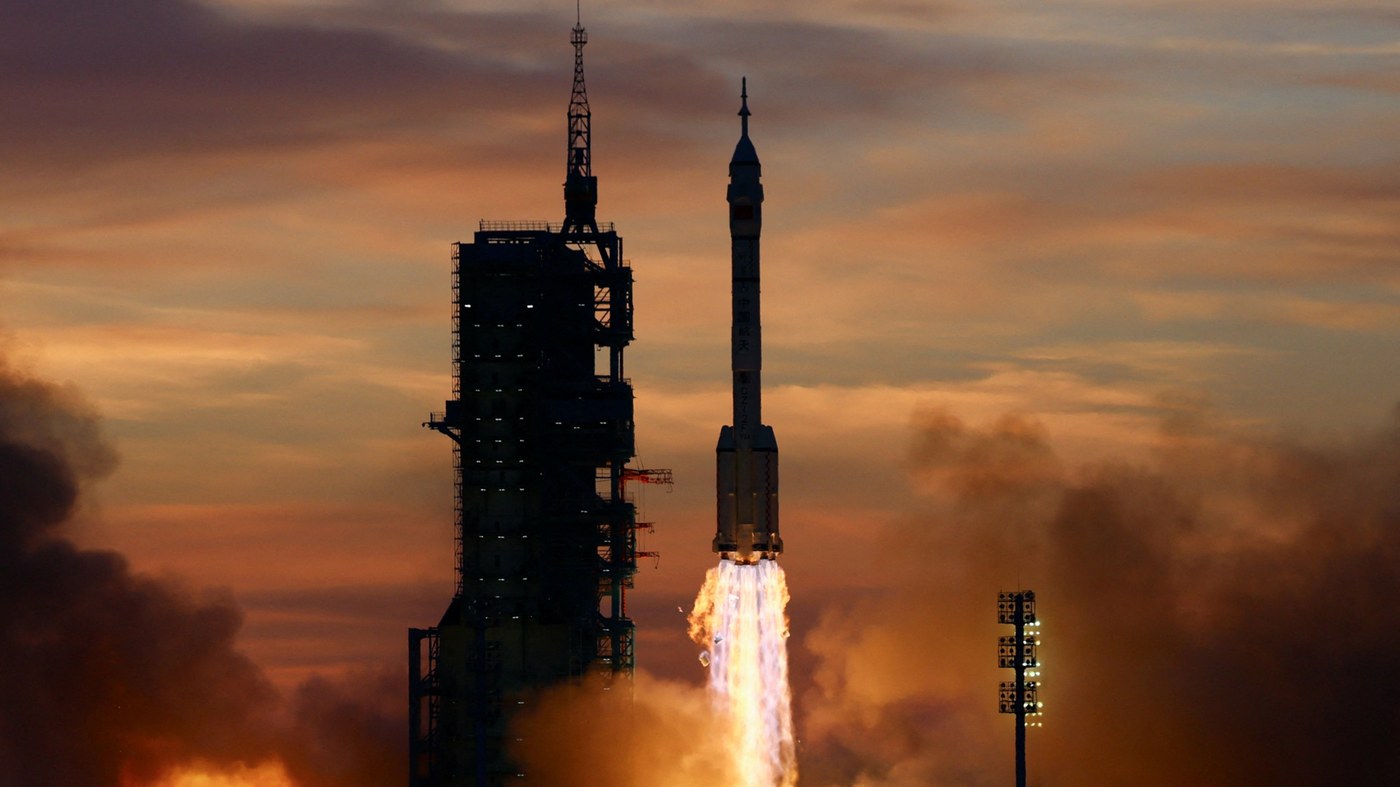
At 5:18am Pakistan time on 25 November 2026, a Long March-2F rocket rose from Jiuquan — carrying Muhammad Zeeshan Ali, a 40-year-old PAF fighter pilot, towards a place no Pakistani has ever been: orbit.
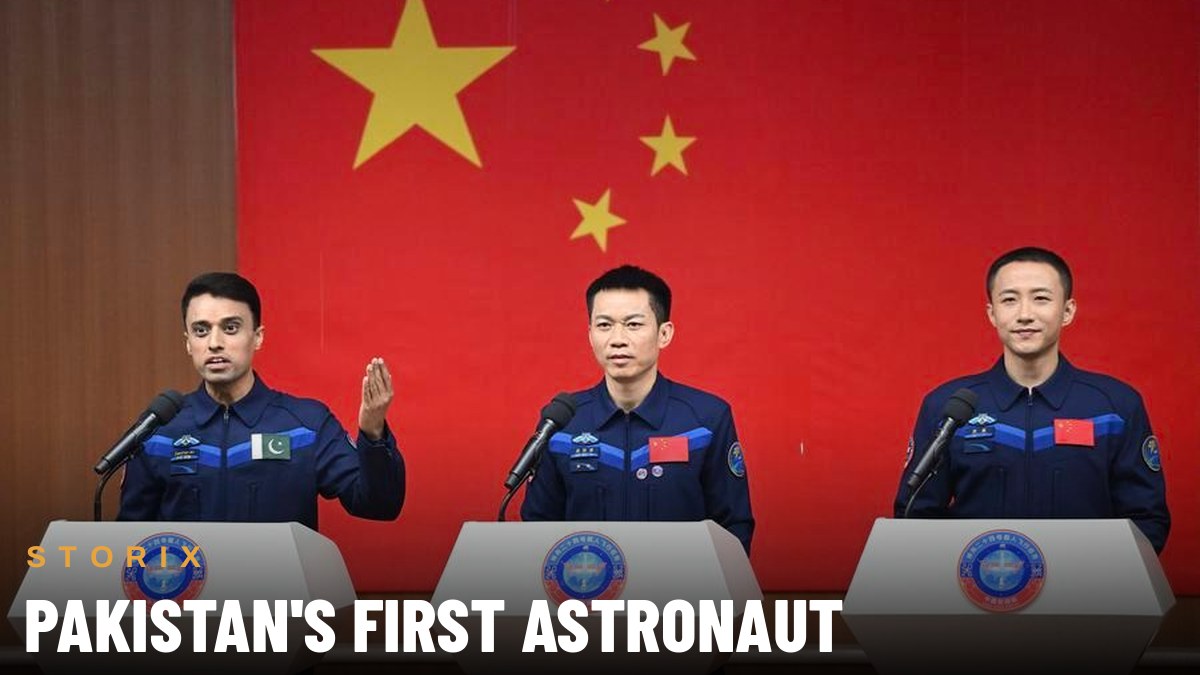
About ten minutes after liftoff, the spacecraft separated from its carrier rocket and entered its planned orbit, and the launch was declared a complete success. It is now bound for Tiangong, China's space station orbiting roughly 400 kilometres above Earth.
Two firsts in one flight
Ali's seat on this mission carries two firsts, not one. He is the first Pakistani ever to travel into orbit — and, once Shenzhou-24 docks, he will also become the first foreign national ever to board the Tiangong station. Until now, China's crewed space programme had flown only its own astronauts; the China Manned Space Agency confirmed before the launch that Ali is the first international crew member to join it.
The crew and the mission
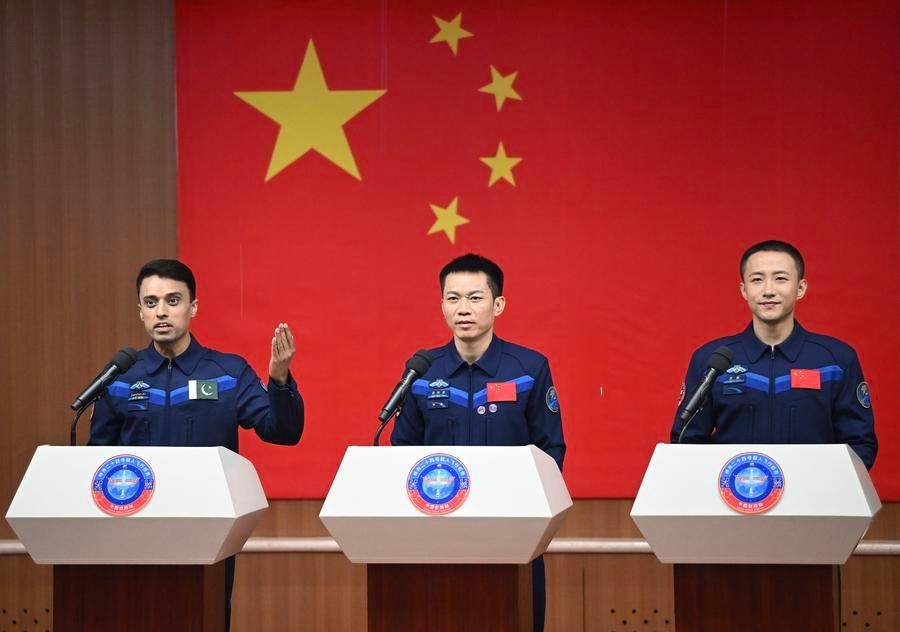
The three-man crew is commanded by Chinese astronaut Tang Hongbo, with Wu Yi serving as flight engineer. Ali flies as payload specialist — his job is not to fly the spacecraft but to run the science. He is expected to spend about a week aboard the station, working alongside the Chinese crew, before returning to Earth aboard the Shenzhou-23 spacecraft.
Dawn reports that Ali will take part in around 90 experiments during the mission, including four joint Pakistan-China projects in biotechnology and materials science developed with Pakistani universities. Among them is an experiment involving cyanobacteria, the photosynthetic micro-organisms — and much of his week will go into installing samples and equipment and confirming they survived the launch.
Seven months to learn a language — and a mission
“I'm not flying for myself. I carry the name of Pakistan on my shoulder.
The flight is the product of a February 2025 agreement between Pakistan's space agency, SUPARCO, and the China Manned Space Agency, under which Ali and a second PAF pilot, Khurram Daud, were selected for astronaut training. Ali compressed a one-year training programme into seven months — centrifuge work, rescue and survival drills, emergency procedures. Yet the hardest part, he said, was not the physical training: it was mastering the Chinese language, in which the whole mission is conducted.
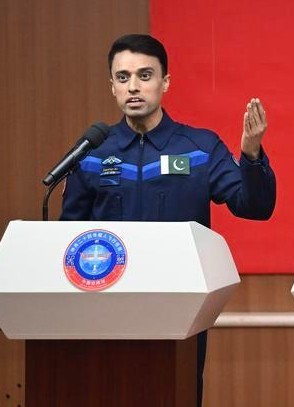
Speaking to reporters at Jiuquan before the launch, Ali summed up what the flight means to him: "I'm not flying for myself. I carry the name of Pakistan on my shoulder." He also thanked the Chinese government for helping Pakistan realise its dream of reaching space.
Pride at home
President Asif Ali Zardari congratulated the nation on what he called a "landmark achievement" and a moment of immense national pride. Prime Minister Shehbaz Sharif sent the crew his best wishes, and Planning Minister Ahsan Iqbal — who witnessed the launch in person in China — wrote that as Shenzhou-24 lifted off, the Pakistani flag rose into orbit, lifting the hopes of millions with it.
SUPARCO was founded in 1961, but for more than six decades a Pakistani in orbit remained a dream rather than a plan. That changed this morning. In about a week's time, Zeeshan Ali will come home aboard Shenzhou-23 — and whatever the experiments find, he will bring back something Pakistan has never had before: proof that its people belong in space.
Sources: Reuters, Dawn, Al Jazeera, Nature and Nikkei Asia reports, 24–25 November 2026.
For more stories like this, subscribe to STORIX with FAYS on YouTube and visit our Videos gallery.
Comments