

News
Two Pilots, Two Flags, One Sky: Zeeshan Ali and Shubhanshu Shukla
Five months apart, two fighter pilots from two neighbouring countries rode two very different rockets to the world’s two space stations. India’s Shubhanshu Shukla flew to the International Space Station as the pilot of a commercial American mission; Pakistan’s Zeeshan Ali flew to China’s Tiangong station as a partner and guest. Together, their stories open a new chapter for South Asia in space.
First, the Indian road
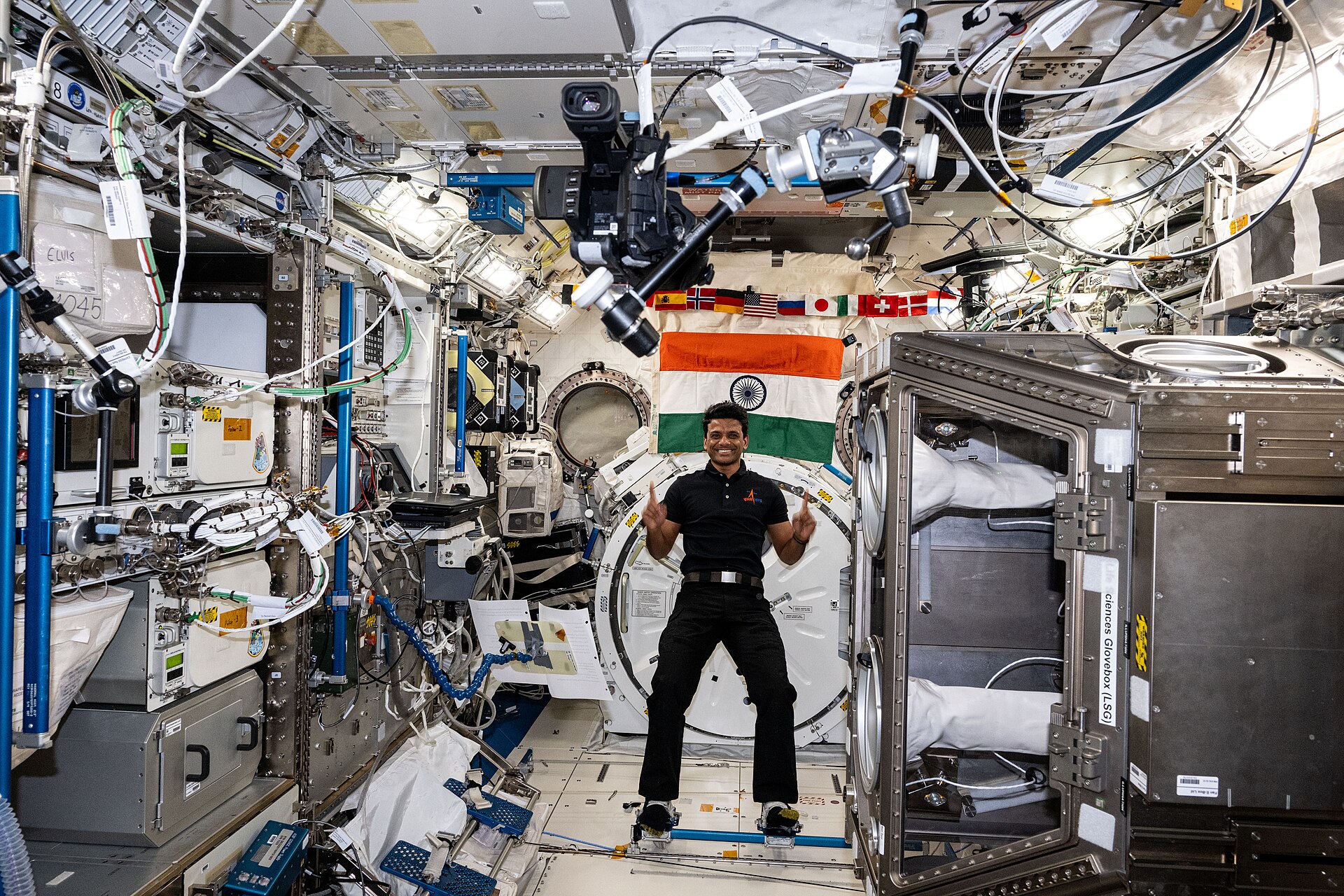
In June 2025, forty-one years after Rakesh Sharma became the first Indian in space, Group Captain Shubhanshu Shukla climbed into a SpaceX Crew Dragon at Florida’s Kennedy Space Center — not as a passenger, but as the pilot. The mission, Axiom Mission 4, was organised by the American company Axiom Space in collaboration with NASA, SpaceX and India’s ISRO. Beside Shukla sat commander Peggy Whitson of the United States and mission specialists from Poland and Hungary — three nations returning to human spaceflight after four decades, aboard one commercial spacecraft.
When the Dragon docked with the International Space Station on 26 June, Shukla became the first Indian ever to board the ISS. His first words from orbit were disarmingly simple: “Kamaal ki ride thi” — it was an amazing ride.
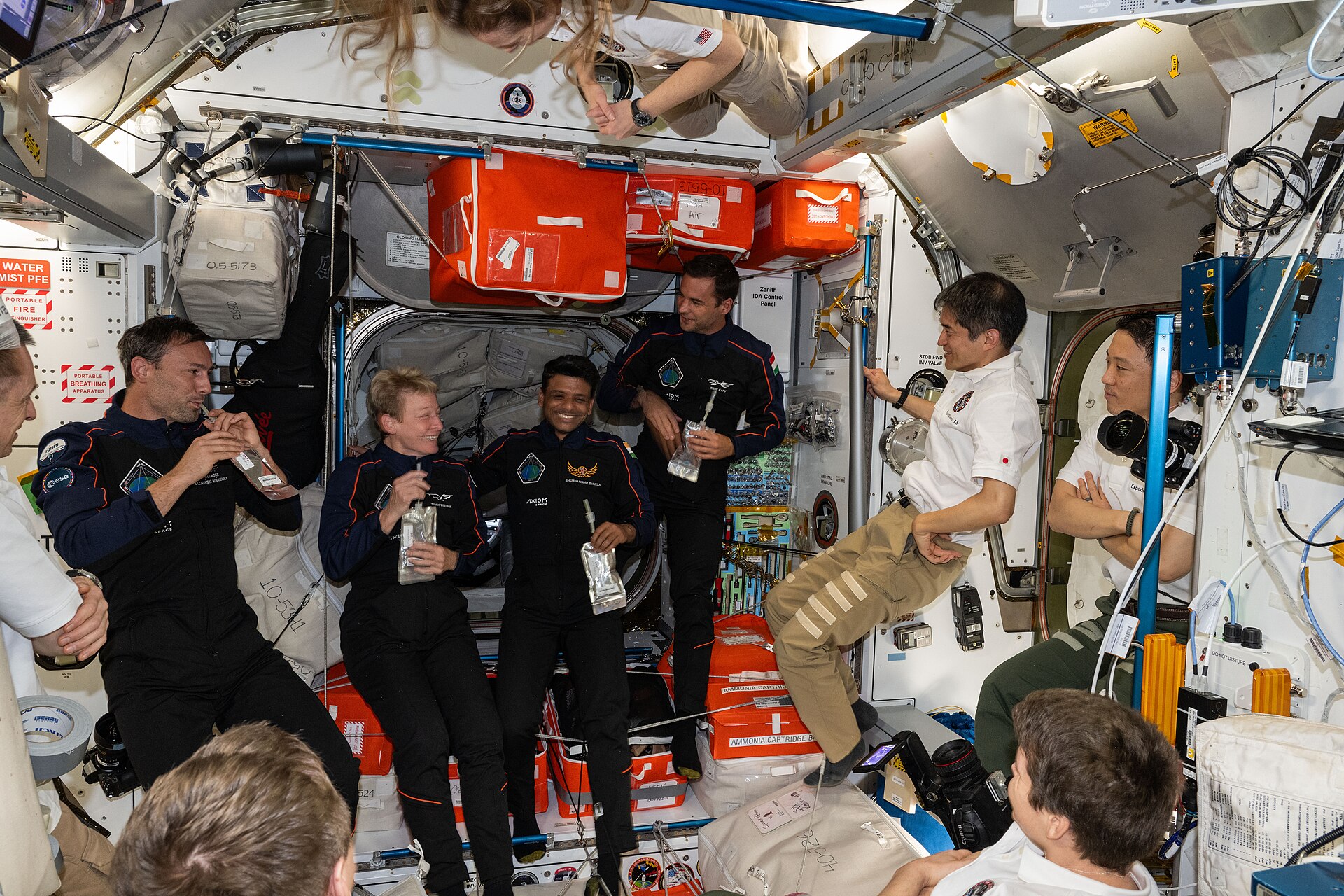
Over 18 days aboard, he completed around 282 orbits of the Earth and ran seven microgravity experiments developed by Indian research institutions, part of a mission programme of some 60 research activities representing 31 countries. On 28 June he spoke live from the station with Prime Minister Narendra Modi. On 15 July, the Dragon splashed down in the Pacific Ocean off the coast of California, and Shukla came home.
The flight was also a rehearsal. Shukla is one of four Indian Air Force test pilots chosen for Gaganyaan, India’s own crewed spacecraft programme. The experience he brought back from the ISS feeds directly into India’s first home-grown human space mission, expected by 2027.
Then, the Pakistani road
Pakistan’s road ran through Beijing. In February 2025, Pakistan’s space agency SUPARCO signed an agreement with the China Manned Space Agency under which a Pakistani astronaut would fly on a Chinese mission — the first time China had opened its station programme to a foreign flyer. Two Pakistan Air Force pilots were selected: Muhammad Zeeshan Ali and Khurram Daud.
Ali, 40, compressed a full year of astronaut training into seven months. The hardest part, he said, was not the centrifuge — it was learning Mandarin, the language of every switch, label and procedure aboard the Chinese station.
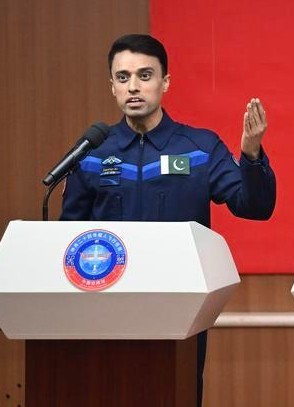
On 25 November 2026, a Long March-2F rocket lifted Shenzhou-24 from Jiuquan with Ali aboard as payload specialist, alongside commander Tang Hongbo and flight engineer Wu Yi. Hours later he floated through the hatch of the Tiangong station into the welcome of the crew already aboard — the first Pakistani in orbit, and the first foreign national ever to enter China’s space station. Before the launch, he had summed the mission up in one sentence:
“I’m not flying for myself. I carry the name of Pakistan on my shoulder.
Ali will spend about a week aboard Tiangong, taking part in a programme of around 90 experiments — including four joint China–Pakistan projects in biotechnology and materials science, and a cyanobacteria study — before returning to Earth aboard the Shenzhou-23 spacecraft.
Two stations, two systems
Set side by side, the two flights describe the two ways a country without a crewed spacecraft of its own can now reach orbit. India bought into the commercial market: a seat on an American private mission to the International Space Station, the shared outpost of the United States, Russia, Europe, Japan and Canada. Pakistan flew through a state partnership: a guest seat inside China’s independent Tiangong station — a programme the United States has long barred its own space agency from cooperating with.
Neither man flew a vehicle his own country built. Both flew as professionals — one as a pilot, one as a payload specialist — on missions planned and operated by others, and both brought home, or will bring home, experience their national programmes could not have gained any other way. And both, notably, are fighter pilots: men who began in cockpits in countries that face each other across a tense border, and who now belong to the small club of humans who have watched that border disappear beneath them.
What it means
For decades, South Asia watched the space age from the ground. In the space of five months, two of its pilots have lived aboard the world’s only two space stations — one on each. India’s flight points towards Gaganyaan and an Indian station of its own; Pakistan’s points towards a deepening partnership with China and, its officials hope, a programme that does not end with one guest flight. Whatever the rivalry below, the sky, it turns out, had room for both.
Reporting based on ISRO and Axiom Mission 4 records, NASA imagery, and Reuters, Dawn and Al Jazeera reporting of the Shenzhou-24 mission, November 2026.
For more stories like this, subscribe to STORIX with FAYS on YouTube and visit our Videos gallery.
Comments