

Islam · Calendar
Two Ramadans in One Year: The Next 30 Years of Fasting, Season by Season
In 2030, the holy month will arrive twice in a single year — 36 fasts in total. It happened last in 1997, and it will not happen again until 2063. Over the next three decades, Ramadan will travel through every season: short winter days first, then the long, hot fasts of summer.
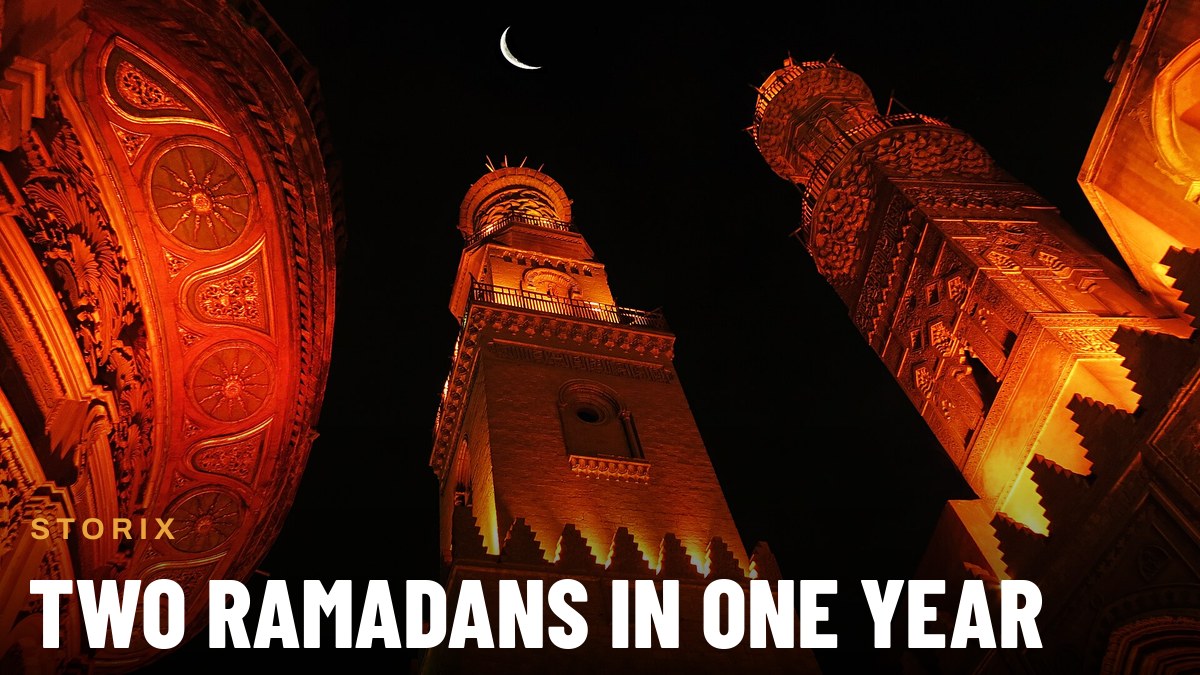
Ask anyone who has fasted through a July Ramadan how long the day felt, and then ask someone who fasted in January how short it was. Both were Ramadan — the same month, the same fast — yet the experience was entirely different. That is because Ramadan does not stay in one season. It moves, a little earlier every year, until after about 33 years it has visited them all. And in 2030, it will do something most people see only once or twice in a lifetime: it will come twice in a single year.
The reason is the calendar itself. The Islamic Hijri calendar follows the moon. Its year is 354 or 355 days long, while the Gregorian year is 365. That gap of about eleven days means Ramadan begins roughly eleven days earlier every year. Over three decades, that slow drift carries the holy month from winter through autumn, into the heat of summer, and back to spring.
The year with two Ramadans
The year to watch is 2030. The first Ramadan of that year is expected to begin around 5 January (1451 AH). Because the Hijri year is short, the next Ramadan will already arrive before the year ends — around 25 December (1452 AH). Between the two, a person fasting both will keep about 36 fasts in a single calendar year: a full month of 30, plus about six days of the second.
It is rare, but it is not new. The last time a year held two Ramadans was 1997, and before that 1965. After 2030, the next double Ramadan will not come until 2063. For most people alive today, 2030 is the one chance to live through it.
“One month, every season, and once in a generation — two Ramadans in a single year.
Winter first: the short, easy fasts
We are in the winter phase now. Ramadan 2026 began in mid-February — 18 February in the Gulf, with the first fast expected on 19 February in Pakistan. In 2027 it will come in early February, and in 2028 and 2029 it will fall in January. The winter run continues through 2035, with short days and short fasts — eleven Ramadans in all, counting both of 2030's. For the elderly and for children fasting their first Ramadans, these are the kindest years of the cycle.
Autumn, then the long summer
From 2036, autumn takes over: five Ramadans from October into September, ending in 2040. Then comes the stretch many people are already thinking about. From 2041, Ramadan moves into summer — starting in late August and drifting back through July, June and May until 2051. Eleven Ramadans in the heat, with long days and long fasts. The fasts of the 2040s will be the hardest of this generation's lifetime, and also the ones that test patience the most.
Finally, from 2052, spring returns: four Ramadans in April and March, ending with 30 March 2055, and the cycle begins its turn back towards winter.
The full expected calendar, 2026–2055
2026 — 18 February · 2027 — 8 February · 2028 — 28 January · 2029 — 16 January · 2030 — 5 January and 25 December · 2031 — 14 December · 2032 — 3 December · 2033 — 23 November · 2034 — 12 November · 2035 — 1 November · 2036 — 20 October · 2037 — 10 October · 2038 — 30 September · 2039 — 19 September · 2040 — 7 September · 2041 — 28 August · 2042 — 17 August · 2043 — 6 August · 2044 — 26 July · 2045 — 15 July · 2046 — 5 July · 2047 — 24 June · 2048 — 12 June · 2049 — 2 June · 2050 — 22 May · 2051 — 11 May · 2052 — 30 April · 2053 — 20 April · 2054 — 9 April · 2055 — 30 March.
One caution belongs with every date here: these are astronomical expectations, calculated from the Umm Al-Qura calendar and widely reported. The actual start of Ramadan is always announced after the moon is sighted, so any single date may shift by a day. The pattern, though, does not shift: winter now, summer in the 2040s, and in 2030, two Ramadans in one year.
Which season's fasts do you love most — the short days of winter, or the long days of summer? Tell us in the comments.
Dates are expected starts from the Umm Al-Qura calendar; the actual start of Ramadan depends on moon sighting.
Watch the video version of this story on STORIX — and for more stories like this, subscribe to STORIX with FAYS on YouTube and visit our Videos gallery.
Comments