

Facts
Starship Reaches Orbit for the First Time! Engines Shut Down, Still a Success
Flight 14 of the world's biggest rocket was the flight in which Starship reached orbit for the first time — after two engines had shut down.
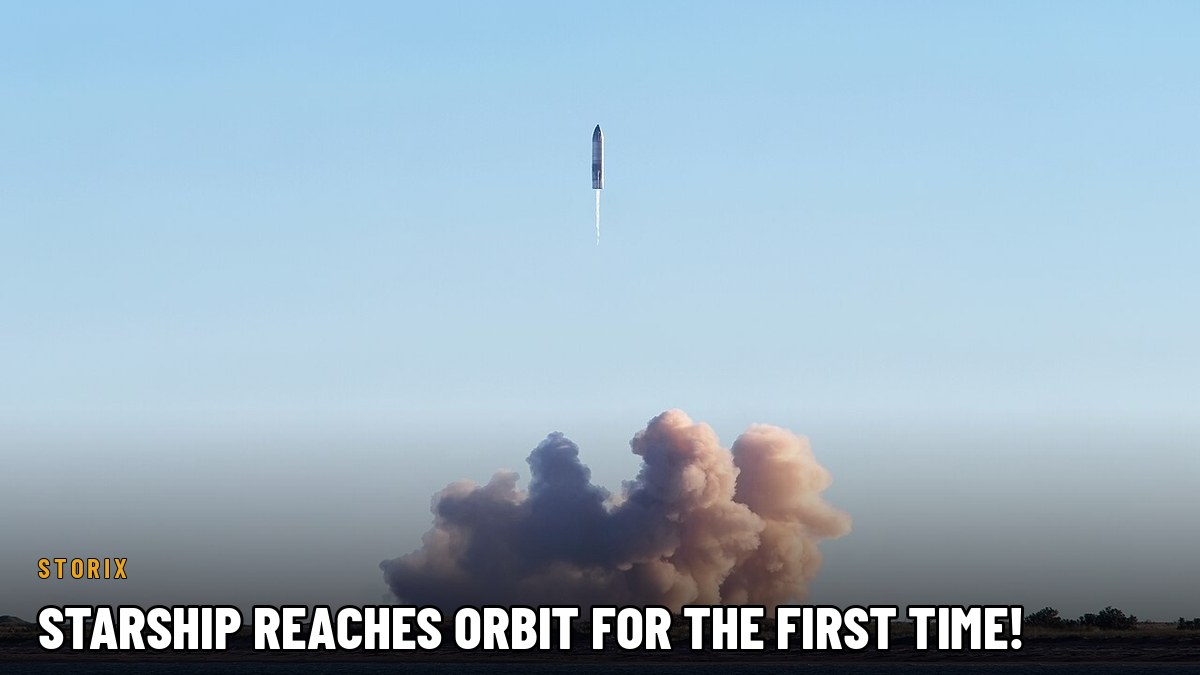
Right at the start of the flight, one engine of the booster and one engine of the ship shut down. For a moment the team considered abandoning the orbit plan — then the decision was made to press on. In about 25 minutes, Starship was in orbit, and the ship released 26 Starlink V3 satellites into space. After this short mission of around three hours, the ship made a soft splashdown in the northern Pacific Ocean and the booster in the Gulf of Mexico — on this flight there was no plan to catch the booster, so both parts were landed in the sea.
With every flight, Starship is coming closer to the day when humans will travel again to the Moon — and then to Mars. Flight 14 is the turning point of that journey where the question 'what if an engine shuts down?' was answered by action: instead of stopping, the rocket completed its mission.
Starship's system is built of two parts — the booster below, which pushes the rocket towards space, and the ship above, which carries the actual payload. Making both parts reusable is the programme's real goal, so that space travel becomes as routine and cheap as an aeroplane flight.
“Instead of stopping, the rocket completed its mission.
In your view, will Starship go to the Moon first, or to Mars? Tell us in the comments. (Facts: STORIX research — SpaceX and National Space Society sources.)
Flight 14 also underlined the philosophy behind the whole programme: fly, learn, and fly again. Each test flight is treated as an experiment whose data matters more than its spectacle — and an experiment that reaches orbit with two engines down tells engineers more than a flawless flight ever could.
For more stories like this, subscribe to STORIX with FAYS on YouTube and visit our Videos gallery.
Comments