

Business · Autos
Cheaper Havals, Thinner Margins: Why Analysts Expect Sazgar’s Profits to Cool After the Price Cuts
Sazgar has slashed prices across its plug-in hybrid range by up to Rs3.8 million, moving ahead of a government tax policy that has not yet taken effect. Buyers get the benefit today; according to Topline Securities, the company’s margins will carry the cost until the policy catches up.
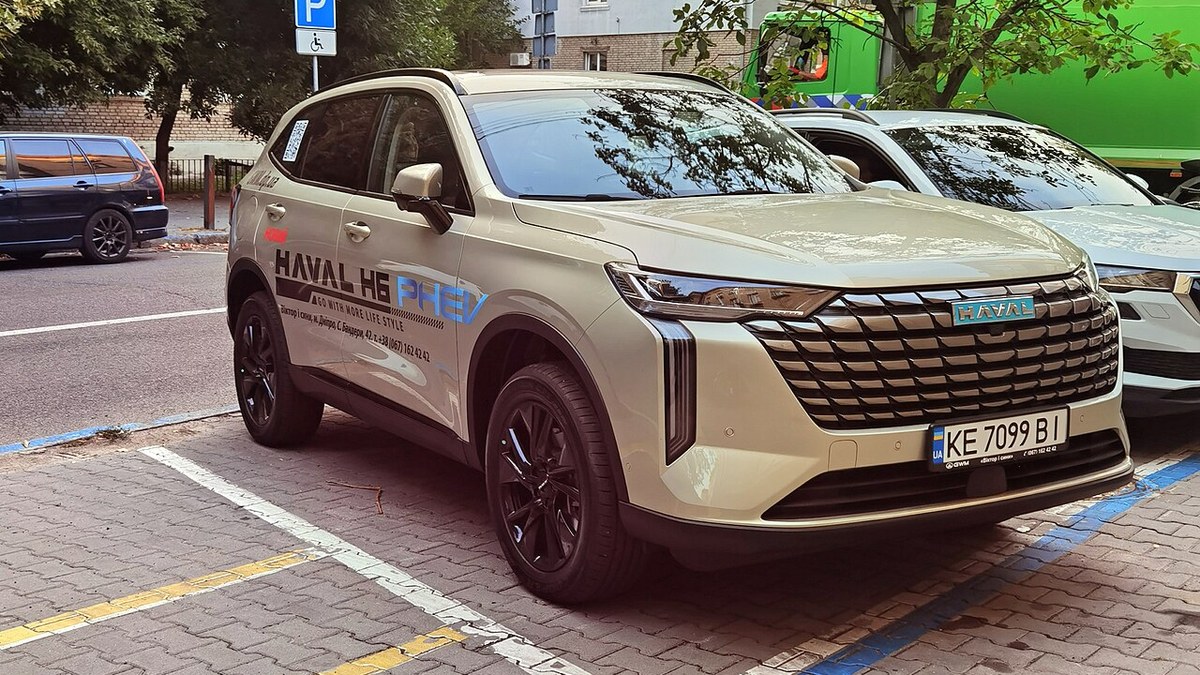
Sazgar Engineering Works, the assembler that sells China’s Great Wall Motor (GWM) brands in Pakistan, has done something no local carmaker had done in years: it has cut its prices. In a notice sent to dealers on 27 November, the company reduced prices across its entire plug-in hybrid (PHEV) range by between Rs400,000 and Rs3.8 million — reductions of roughly 4 to 17 percent that took effect immediately. It is Sazgar’s first price revision since 2023, and it makes the company the first automaker in Pakistan to pass on the benefits of the government’s proposed new energy vehicle policy before that policy has formally taken effect.
The biggest winner is the flagship. The GWM Tank 500 PHEV, a large off-road SUV, drops by Rs3.8 million — from Rs22.5 million to Rs18.7 million, a cut of nearly 17 percent. The Haval H6 plug-in hybrids follow: the all-wheel-drive Hi4 variant is Rs1.6 million cheaper at Rs11.295 million, the H6 GT PHEV falls by Rs954,000 to Rs11.995 million, and the front-wheel-drive H6 PHEV receives a smaller Rs400,000 reduction to Rs10.449 million. All of the prices are ex-factory.
In a move dealers rarely see, the lower prices are not limited to new orders. Sazgar has extended them to every existing booking still awaiting delivery, including customers who have already paid in full. The Tank 500 PHEV’s new tag also undercuts its own sibling: at Rs18.7 million, the plug-in hybrid is now Rs1.8 million cheaper than the conventional hybrid Tank 500 HEV, which was launched alongside it in January 2026 at Rs20.5 million.
The cuts are a bet on a tax change that has been approved in principle but not yet written into law. Under the proposed Automotive Industry Policy 2026–31 — unveiled at a government press conference on 7 November and approved by Prime Minister Shehbaz Sharif — sales tax would be charged by powertrain: 1 percent on battery-electric vehicles, 6 percent on range-extended models and 9 percent on plug-in hybrids, while conventional hybrids and petrol cars remain at 18 percent. The framework still needs clearance from the International Monetary Fund and the Federal Cabinet, and it has not been formally notified. Sazgar, in effect, has priced its cars as if the 9 percent rate were already here, while it continues to pay 18 percent.
“Sazgar is handing customers tomorrow’s tax cut today — and its own margins will carry the difference until the policy becomes law.
That gap is why analysts expect the company’s profitability to take the hit. Sazgar’s margins were already thinning before this week. In FY26 its Haval hybrids enjoyed concessionary sales tax rates of 8.5 to 12.75 percent, and gross margins ran at about 25 percent. When the concession expired and the rate rose to 18 percent, Sazgar absorbed the increase rather than raise prices — and its gross margin slid to about 20 percent in the first quarter of FY27.
According to Topline Securities, the price cuts push that squeeze much further. The brokerage expects Sazgar’s gross margin to fall to around 14 percent in the second quarter of FY27, as lower sticker prices meet an unchanged tax bill. It has cut its earnings estimate for the quarter from Rs57 to Rs47 per share, and calculates that every single percentage point of gross margin is worth roughly Rs4 a share in earnings. Its base case assumes 4,000 four-wheeler sales in the quarter — a volume the cheaper prices are presumably meant to deliver.
The timing is not easy. Sazgar’s four-wheeler sales fell about 12 percent year-on-year to 3,137 units in the first quarter of FY27, even as revenue rose 23.3 percent to Rs41.71 billion; profit after tax slipped 8.6 percent to Rs4.04 billion. Sharper prices may defend volumes against a wave of new Chinese-brand rivals — but each vehicle will earn the company less for as long as the tax concession remains on paper.
The story, on Topline’s reading, has a second half. Once the auto policy is formally notified and the 9 percent plug-in hybrid rate becomes real, the brokerage expects gross margins to recover to 18–19 percent in the second half of FY27. Until then, Sazgar is running an unusual experiment: giving customers tomorrow’s tax cut today, and letting its own margins carry the difference. How long that lasts depends less on what happens in the showroom than on a notification still making its way through Islamabad.
Price details from Sazgar’s dealer notice, as reported by Dawn, PakWheels, ProPakistani and Profit by Pakistan Today. Margin and earnings estimates are by Topline Securities, as reported by ProPakistani, PKRevenue and Profit.
For more stories like this, subscribe to STORIX with FAYS on YouTube and visit our Videos gallery.
Comments