
Islam
What Is Thanksgiving — and What Does Islam Say About Joining the Day of Thanks?
Today, Thursday 26 November, millions of American families sit down to roast turkey and say out loud what they are thankful for. For the millions of Muslims who live in the West — and for curious readers everywhere — the day raises a gentle question: what exactly is being celebrated, and where does Islam stand on joining in? STORIX explains the holiday, and how scholars describe its place for Muslims.
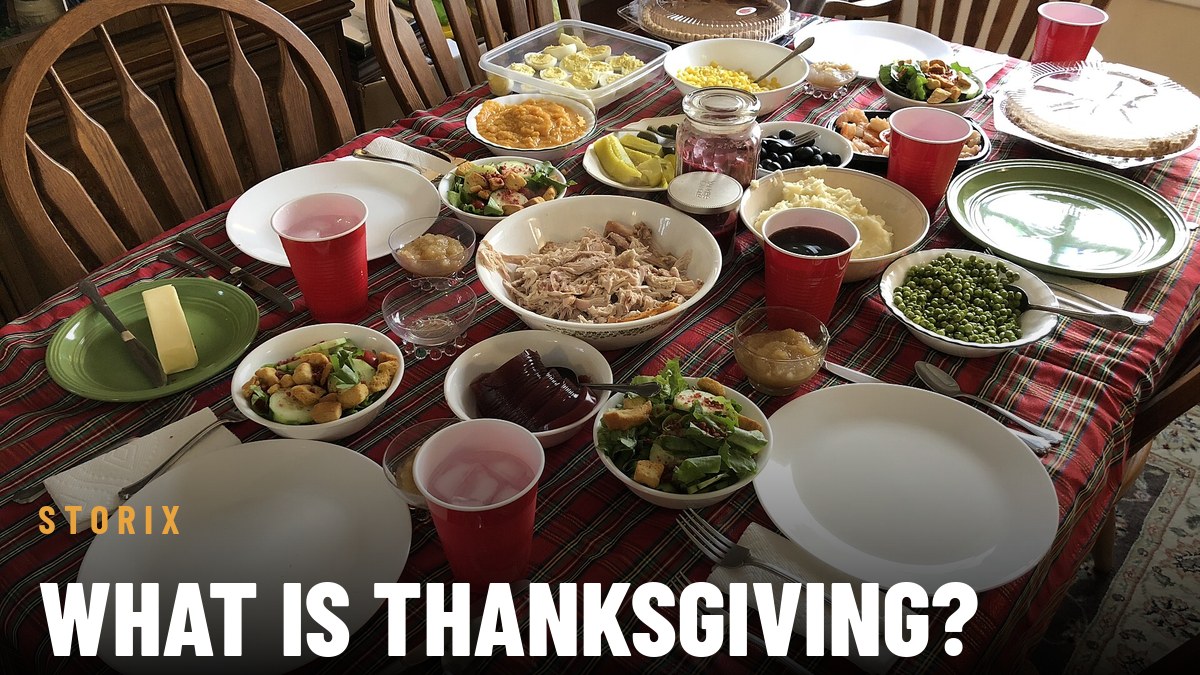
Today, Thursday 26 November, the United States slows down for the most family-centred day of its year. Airports have been packed all week and highways jammed, and this afternoon millions of families will sit down to a menu their grandparents knew: roast turkey, cranberry sauce, mashed potatoes and pumpkin pie. Before the meal, many will pause and say, out loud, what they are thankful for. That is Thanksgiving — a whole nation stopping, on the fourth Thursday of November, to count its blessings.
A harvest feast that became a national day
The story begins in the autumn of 1621 at Plymouth, in present-day Massachusetts. The English settlers known as the Pilgrims had survived their first brutal year in the New World with the help of the Native American Wampanoag people, and after their first successful harvest the two communities shared a feast that lasted three days. Days of thanksgiving were marked locally in America for generations afterwards, but the single national day is Abraham Lincoln's doing: in 1863, in the middle of the Civil War, he proclaimed a national day of “Thanksgiving and Praise to our beneficent Father who dwelleth in the Heavens”. Congress later fixed the date as the fourth Thursday of November. Canada keeps its own Thanksgiving on the second Monday of October, with roots in still earlier harvest gatherings.
What the day looks like now
Modern Thanksgiving is, above all, a homecoming. It is the busiest travel period of the American year — AAA expects 81.5 million people to journey for it this week — because the point of the day is to be at the same table as your family. Around that table sit the traditions: a prayer or a round of spoken thanks before eating, the New York parade with its giant balloons, American football on television, and, in thousands of towns, volunteers serving free Thanksgiving dinners at food banks and community kitchens. Most big stores close for the day — and reopen at dawn for Black Friday. It is a civic and cultural holiday: no church service defines it, and Americans of every faith and none mark it in their own way.
Gratitude is already at home in Islam
For a Muslim reader, the heart of the day sounds familiar. Gratitude — shukr — runs through the Qur'an and through daily Muslim life: believers are taught to begin eating in Allah's name, to thank Him after every meal, and to see health, family and food itself as blessings to be acknowledged, not taken for granted. The Qur'an states the principle in a promise:
“If you are grateful, I will surely increase you [in favour]. — Qur'an 14:7
It is also worth noting what Thanksgiving is not. It was not founded as the festival of a church, and it belongs to no single religion; Lincoln framed it as a nation giving thanks to God. That is why, when Muslims in America and Europe ask scholars about the day, the discussion usually starts from gratitude — and from the difference between a cultural occasion and an act of another faith's worship.
So what do scholars say about joining in?
Many scholars — including prominent voices in North America — explain that because Thanksgiving is a national and cultural occasion rather than a religious rite of another faith, there is no harm in a Muslim family sharing the meal, visiting neighbours or hosting friends on the day. The boundaries they commonly mention are the familiar ones: the food should be halal, alcohol avoided, gratitude directed to Allah, and no religious ritual of another faith adopted. On that reading, a family dinner and a sincere word of thanks to Allah sit comfortably with Islamic values.
Other scholars advise caution. They point to the Islamic principle of not imitating the distinctive religious festivals of other communities, and they note that a national day can still carry meanings a Muslim may not wish to endorse; some families therefore treat Thanksgiving simply as a welcome day off work and school, without marking it as a celebration of their own. Scholars who discuss the question generally agree on one thing: much turns on intention, and on what a person actually takes part in — which is why practice varies from household to household, and why readers follow the scholars they personally trust.
What no one disputes is the centre of the day itself. A pause in the year to gather family, share food and say thank you is an idea every culture understands. For Muslims, that gratitude already has a name, a direction and a daily place in life — which is why, for many of them, the Thanksgiving table feels less like somebody else's festival and more like a reminder of their own.
Sources: Encyclopaedia Britannica, “Thanksgiving Day”; US National Archives, Abraham Lincoln's Thanksgiving Proclamation, 1863; The Canadian Encyclopedia, “Thanksgiving in Canada”; Qur'an 14:7, Sahih International translation. Scholarly positions are summarised in general terms; STORIX reports them and issues no ruling of its own.
For more stories like this, subscribe to STORIX with FAYS on YouTube and visit our Videos gallery.
Comments